

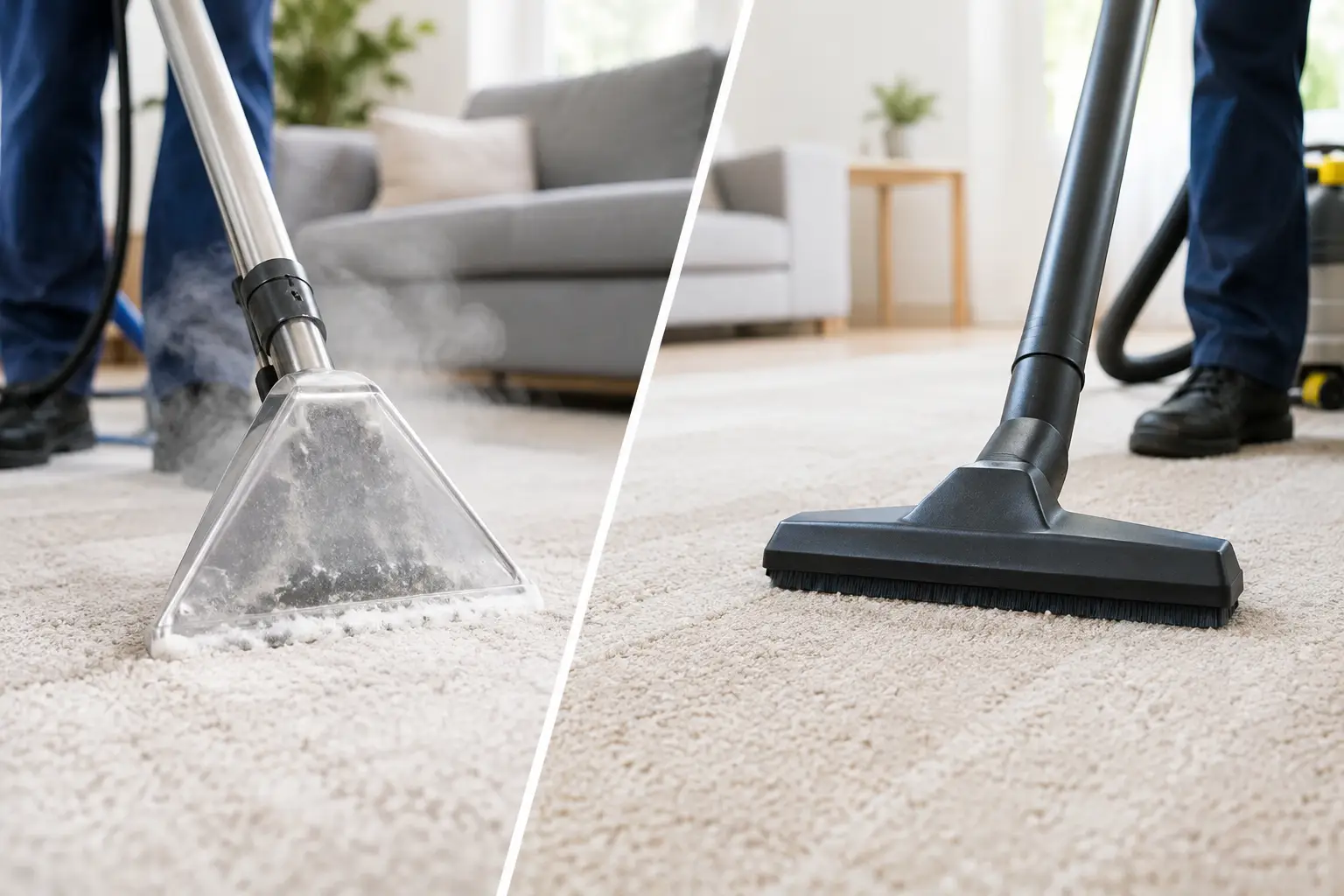
Steam Cleaning Versus Dry Cleaning for Carpets
A carpet can look clean after a quick surface treatment while still holding sand, oils, allergens, and moisture deep in the pile. That is why steam cleaning versus dry cleaning is not simply a question of which option dries faster. The right method depends on the material, the level of soil, the source of staining or odor, and how quickly the space must return to service.
For homeowners, hotels, offices, and property managers in Nassau, the decision can affect indoor appearance, carpet life, and the risk of recurring odors or stains. Professional assessment matters most when carpeting has experienced water intrusion, pet contamination, heavy traffic, or long-term buildup that ordinary vacuuming cannot remove.
What Steam Cleaning Actually Means
In professional carpet care, “steam cleaning” commonly refers to hot water extraction. The process uses heated water and a cleaning solution applied under controlled pressure, followed immediately by powerful extraction. The machine removes a significant portion of the loosened soil, cleaning solution, and moisture from the carpet.
Despite the popular name, the carpet is not usually cleaned with billowing steam alone. Effective hot water extraction relies on the balance of heat, chemistry, agitation, dwell time, and vacuum recovery. This is what makes it a restorative cleaning method rather than a simple surface refresh.
Hot water extraction is generally the stronger choice for carpets with embedded soil, food and beverage spills, tracked-in sand, body oils, pet residues, or lingering odors. It can also be appropriate for upholstery and area rugs, although each fabric or fiber type requires its own tested cleaning approach.
The trade-off is drying time. A properly cleaned carpet should not remain wet for an extended period, but it does need time to dry. Professional fast-drying equipment, correct water flow, thorough vacuum passes, ventilation, and humidity control all make a meaningful difference. In the Bahamas’ humid climate, this part of the process should never be treated as an afterthought.
How Dry Cleaning Works
Dry cleaning for carpet is a broad term. In many cases, it describes low-moisture methods that use absorbent compounds, encapsulation products, or specialized pads and machines. The goal is to lift or surround soil with limited water, then remove it through vacuuming or mechanical action.
This approach can be useful when a carpet needs to be back in use quickly. A hotel corridor, office workspace, retail floor, or occupied residence may not have the downtime required for a deeper wet-extraction service. Low-moisture cleaning can improve appearance and reduce surface soil with minimal disruption.
However, dry cleaning does not always provide the same flushing action as hot water extraction. If the carpet contains heavy sand, sticky residue, urine contamination, old spills, or deeply embedded oils, a low-moisture method may leave material behind below the visible surface. It can be an effective maintenance service, but it is not automatically the right answer for every cleaning problem.
Steam Cleaning Versus Dry Cleaning: The Practical Difference
The central difference is not whether one method is “good” and the other is “bad.” It is the level and type of soil each process is designed to address.
Steam cleaning, or hot water extraction, is typically better suited to restorative work. It uses more moisture but also provides the ability to rinse and extract contaminants from deeper in the carpet. When performed correctly, it is especially valuable for heavily used family rooms, guest rooms, rental properties, commercial entryways, and spaces affected by staining or odor.
Dry cleaning is generally better suited to interim maintenance and locations with strict drying-time requirements. It can maintain a professional appearance between deeper cleanings, particularly in commercial settings where the carpet must be available soon after service.
Neither method should be selected based on a one-size-fits-all promise. A delicate natural-fiber rug, for example, may require careful low-moisture cleaning or a controlled hand-cleaning process. A synthetic commercial carpet with heavy traffic lanes may benefit from hot water extraction after appropriate preconditioning and agitation. The carpet’s construction, backing, age, previous cleaning history, and condition all matter.
When Hot Water Extraction Is the Better Choice
Choose professional hot water extraction when the priority is deep soil removal rather than immediate use of the space. This method is often the preferred option after a period of heavy occupancy, before or after tenant turnover, or when carpets have visible traffic patterns that return soon after vacuuming.
It is also a stronger option when odor is part of the concern. Odor-producing residues are often below the fibers, in the backing, padding, or subfloor. Surface deodorizer alone may mask the problem temporarily. Effective odor control begins with identifying the source and cleaning or treating the affected materials correctly.
Hot water extraction is not a substitute for water damage restoration or mold remediation. If carpeting has been saturated by a plumbing leak, storm event, or contaminated water source, the correct response may involve moisture assessment, controlled drying, removal of affected materials, and sanitation measures. Cleaning alone cannot resolve an active moisture problem.
When Low-Moisture Dry Cleaning Makes Sense
Low-moisture dry cleaning can be the practical choice when downtime is limited. An office may need its carpet cleaned after business hours and ready for staff the next morning. A hospitality property may need a corridor refreshed between guest activity. In these situations, rapid drying can be a major operational advantage.
It can also work well as part of a planned maintenance schedule. Regular vacuuming, spot response, low-moisture interim cleaning, and periodic hot water extraction can extend the useful life of commercial carpeting. This approach helps prevent soil from becoming permanently bonded to the fibers, where it causes dullness, abrasion, and premature wear.
The key is setting realistic expectations. A quick-dry method can improve the appearance of a carpet, but it should not be sold as a cure for severe contamination, persistent odors, or extensive staining. Those conditions require a more thorough evaluation.
Fabric, Backing, and Stain Risks Matter
The wrong cleaning method can create avoidable problems. Over-wetting may affect certain backings, adhesives, or natural fibers. Insufficient extraction can leave residue that attracts soil. Aggressive brushing can damage delicate fibers, while the wrong cleaning chemistry may cause color loss or browning.
Professional cleaning starts with inspection. Technicians should identify the fiber type, examine wear areas, test for colorfastness where appropriate, and determine whether stains are removable or permanent. Some marks are not stains at all. Bleach damage, dye loss, wear, burns, and chemical damage cannot be cleaned away, though they may be candidates for repair or color restoration.
This is particularly important for area rugs and upholstered furniture. Wool, silk, cotton, viscose, linen, and specialty blends respond differently to moisture and cleaning agents. A method that is safe for synthetic wall-to-wall carpet may be unsuitable for a valuable rug or delicate upholstered piece.
Drying Is Part of the Cleaning Result
A carpet cleaning job is not complete when the equipment leaves the property. Proper drying protects the result. Carpets that stay damp too long can develop odors, wick soil back to the surface, and create conditions that are unfavorable for indoor environmental quality.
After hot water extraction, airflow is essential. Ceiling fans, air conditioning, open internal airflow where conditions permit, and professional air movers can accelerate drying. Avoid replacing heavy furniture immediately unless protective tabs or blocks are used. Walking on damp carpet should also be limited, especially from outdoor areas where sand and soil can be tracked back onto freshly cleaned fibers.
Fast drying does not mean rushing the cleaning process. It means using the right equipment, recovery technique, and moisture management practices to leave the carpet clean without leaving it overly wet.
Choosing a Provider for High-Stakes Cleaning
For routine appearance cleaning, method selection is still important. For water damage, mold concerns, smoke odor, pet contamination, or valuable textiles, it becomes critical. Look for a provider that can assess the full condition of the affected materials rather than offering one technique for every job.
Prochem Bahamas brings restorative cleaning capability, advanced extraction equipment, and IICRC-certified expertise to carpet, upholstery, odor, water damage, and indoor environmental challenges. That broader capability is valuable when a cleaning concern turns out to involve more than visible dirt.
Before scheduling, describe the problem plainly: when the stain appeared, whether water was involved, what products have already been used, and whether there is a recurring odor. Those details help determine whether steam cleaning, dry cleaning, specialty treatment, or a more comprehensive restoration response will protect the property best.
The most useful choice is the one that matches the condition of the material, the demands of the space, and the result you need after the carpet looks clean.


Comments