


Commercial Flood Recovery for Business Properties
A flooded lobby, guest room, office suite, retail floor, or commercial kitchen can disrupt far more than the space itself. Commercial flood recovery is the work of protecting people, preserving materials, documenting conditions, and getting a facility back to safe operation without leaving hidden moisture behind.
For property managers and business owners, the first visible cleanup is rarely the full solution. Water can move beneath flooring, behind baseboards, into wall cavities, through carpet backing, and into HVAC components. A professional response must address the source, the affected materials, and the conditions that can lead to mold growth, odors, and extended downtime.
What commercial flood recovery requires
The right recovery plan depends on the water source, how long materials were wet, the type of construction, and the way the property is used. A hotel, healthcare facility, office building, restaurant, and retail location each have different operational priorities. Some areas may need immediate containment and drying while others require controlled access, cleaning, or removal of unsalvageable materials.
The work begins with a detailed assessment. Restoration specialists identify the water category, inspect affected rooms and adjacent areas, measure moisture in building materials, and determine how far the loss has traveled. Surface dryness is not a reliable indicator. Carpet may feel dry while the pad, subfloor, baseboards, or wall framing still hold damaging moisture.
Water from a clean supply line may allow more materials to be restored if handled quickly. Water from a drain backup, toilet overflow, storm surge, or outdoor flooding can carry contaminants. In those situations, cleaning and sanitization requirements are more extensive, and porous materials may need to be removed for health and safety reasons.
The first hours affect the final outcome
A fast, organized response can reduce replacement costs and shorten the interruption to normal operations. It also gives decision-makers a clearer record of what happened, which is useful for insurance reporting and repair planning.
The first priority is safety. Electrical hazards, unstable ceiling materials, contaminated water, slip hazards, and compromised equipment must be addressed before employees, guests, or customers return to the area. If water is still entering the building, stopping the source is essential. This may mean shutting off a water supply, arranging emergency plumbing work, securing roof damage, or preventing additional stormwater intrusion.
Next comes water extraction. Commercial-grade extraction equipment removes standing water from hard surfaces, carpet, padding, and other affected materials. Rapid extraction matters because drying equipment works more effectively after excess water has been removed. It can also improve the chances of saving carpet, furnishings, and certain structural materials.
A professional team should then establish drying goals based on moisture readings, not guesswork. Air movers, dehumidifiers, and specialized drying equipment are placed to create the right airflow and humidity conditions for the affected structure. Conditions must be monitored and adjusted as materials dry. Simply placing fans in a room can move humid air around without solving moisture trapped below or behind finished surfaces.
Commercial flood recovery is more than water removal
Water removal is only one phase of commercial flood recovery. Proper restoration also includes cleaning, sanitation where required, odor control, and verification that the area has reached an acceptable drying standard.
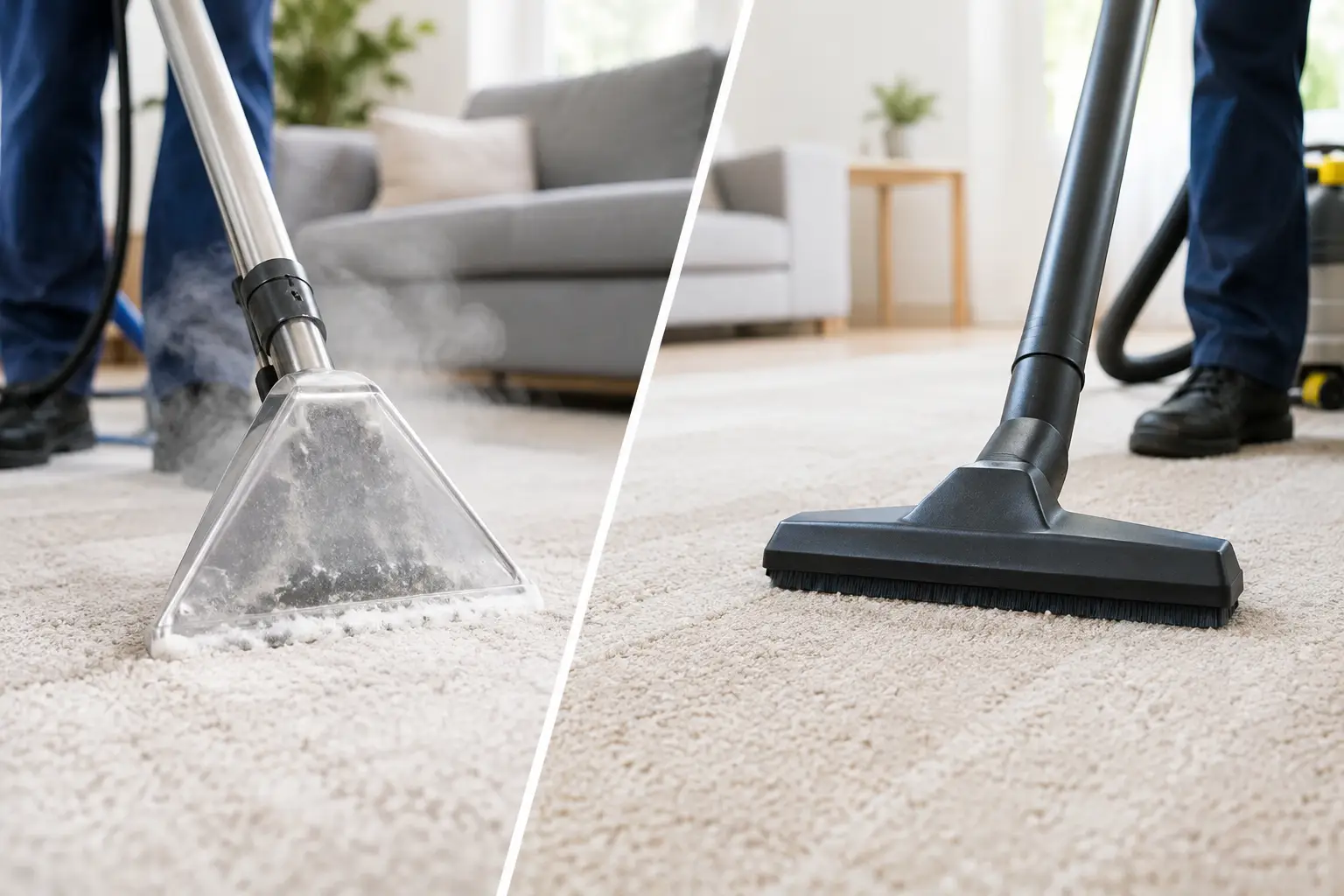
Carpets often create difficult decisions. When water is clean and extraction begins quickly, commercial carpet may sometimes be cleaned, dried, and restored. The answer changes when water is contaminated, when the carpet has remained wet for an extended period, or when the backing and padding cannot be adequately cleaned and dried. Reusing a wet, contaminated carpet to avoid short-term costs can create a larger indoor environmental problem later.
Hard flooring presents its own challenges. Water can travel under luxury vinyl tile, laminate, engineered wood, ceramic tile, and stone finishes. Some materials tolerate moisture better than others, but even durable surfaces can conceal wet adhesives, underlayment, or subflooring. Wood flooring may cup, buckle, stain, or separate if drying is delayed or poorly controlled.
Ceilings and walls should also be evaluated carefully. Saturated drywall can lose structural integrity, while insulation can hold moisture long after the exterior surface appears normal. Targeted removal of affected materials may be necessary to access the structure and prevent mold growth. This is not a failure of the restoration process. It is often the correct step to protect the building and avoid repeat work.
HVAC and indoor air quality considerations
Floodwater and elevated humidity can affect more than the visible room. If the HVAC system was operating during a water event, ductwork and air-handling components may require inspection. Moisture, dust, and contaminated particles can be distributed through the system or settle in areas that are difficult to reach.
Duct and HVAC cleaning may be appropriate when the system has been exposed to contamination, when water damage has created a persistent odor issue, or when there is concern about debris and moisture within the system. The approach should be based on the actual condition of the equipment, not treated as an automatic add-on. Proper inspection helps determine whether cleaning, filtration changes, component service, or other corrective work is needed.
Documentation protects the property owner
A commercial water loss often involves facility managers, ownership groups, tenants, insurers, adjusters, and contractors. Clear documentation keeps the project moving and supports practical decisions about restoration versus replacement.
Useful records include the source of water, affected locations, moisture readings, photographs, equipment placement, daily drying progress, materials removed, and cleaning procedures performed. This documentation demonstrates that the response was methodical and that drying decisions were based on measured conditions.
For businesses with multiple stakeholders, it also helps establish a common understanding of what areas are safe to reopen and what work remains. A retail storefront may be able to reopen with an isolated work area, while a food service operation may require a more controlled cleanup before resuming service. The recovery plan should support business continuity where it is safe to do so.
When mold prevention becomes a priority
Mold does not wait for a renovation schedule. In a warm, humid climate, materials that remain wet can become a concern quickly. The risk is higher in concealed spaces, under floor coverings, inside wall cavities, and in areas with limited airflow.
The best prevention is prompt extraction and controlled drying. If microbial growth is already visible or suspected, the work may need to shift from basic water restoration to a containment-focused mold remediation process. That can include isolating affected areas, removing impacted porous materials, cleaning structural surfaces, and using appropriate air management procedures.
Avoid relying on fragrance products to cover a musty smell. Odors after a flood often point to moisture, contamination, or microbial activity that has not been fully addressed. Effective odor control begins by correcting the source and cleaning the affected materials properly.
Choosing a restoration partner for commercial properties
Commercial properties need more than a general cleaning crew after a flood. Look for a provider with water damage, mold remediation, specialty cleaning, and indoor environmental capabilities under one roof. That combination reduces handoffs between vendors and provides a clearer plan when carpets, upholstery, tile, stone, wood flooring, ducts, or odor issues are part of the same loss.
Training and equipment matter. IICRC-certified practices, moisture detection tools, commercial extraction systems, dehumidification equipment, and fast-drying cleaning technology all support a more controlled recovery process. Experience also matters when deciding what can be saved, what needs removal, and how to protect occupied areas during restoration.
Prochem Bahamas brings 26 years of restorative cleaning and remediation experience to complex commercial losses across Nassau and the Family Islands. The goal is not simply to make the property look dry. It is to help restore a clean, stable, and professionally maintained environment that supports safe operations.
After a flood, the best next step is to treat every affected area as part of one connected building system. Early assessment, measured drying, informed cleaning decisions, and careful documentation give a business the strongest path back to normal operations.


Comments