


When Should Carpets Be Professionally Cleaned?
A carpet can look presentable while holding dry soil, allergens, oils, and residue deep below the surface. That is why the question of when should carpets be professionally cleaned is not answered by appearance alone. The right schedule depends on foot traffic, occupants, pets, spills, humidity, and whether the property is a private home, office, rental, or hospitality space.
Professional cleaning is preventive maintenance as much as it is appearance care. Removing embedded soil helps protect carpet fibers from premature wear, manages odors, supports a cleaner indoor environment, and keeps high-visibility spaces ready for residents, guests, clients, and staff.
When Should Carpets Be Professionally Cleaned?
For most homes, professional carpet cleaning every 12 to 18 months is a sound baseline. Homes with children, pets, frequent entertaining, or family members affected by allergies may benefit from cleaning every 6 to 12 months. In Nassau's warm, humid environment, timely cleaning is particularly valuable because moisture, tracked-in debris, and spills can create odor and staining issues more quickly than many owners expect.
Commercial and hospitality carpets usually require a more frequent maintenance plan. Offices with steady foot traffic may need professional service every 6 months, while hotel corridors, lobbies, restaurants, retail spaces, and other high-use areas may require quarterly cleaning or targeted interim cleaning between full restorative services.
The schedule should be adjusted when conditions change. A rental property after a tenant move-out, a home following renovations, or an office after a busy season may need service ahead of its normal maintenance interval. Waiting until carpet looks heavily soiled often means dirt has already worked into the fibers and backing.
A practical cleaning schedule by use
Light-use rooms, such as formal living rooms or guest bedrooms, can often remain on a 12- to 18-month schedule if vacuumed consistently and protected from spills. Main living areas, bedrooms in active households, and home offices generally need attention every 6 to 12 months.
For commercial properties, frequency is driven by traffic rather than square footage alone. A small reception area that sees dozens of visitors each day can require more maintenance than a much larger, lightly used office. Entrance areas, elevator approaches, hallways, break rooms, and seating zones should receive special attention because they collect the greatest concentration of soil and oils.
Signs Your Carpet Needs Professional Attention Now
A routine schedule is useful, but certain warning signs call for service sooner. Persistent odors, visible traffic lanes, recurring spots, and a dull or matted texture are clear signals that ordinary vacuuming is no longer enough.
If the carpet feels sticky, stiff, or seems to attract soil quickly after a previous cleaning, it may contain residue from do-it-yourself products or improper cleaning methods. Professional restorative cleaning is designed to remove embedded contamination while using the correct chemistry, agitation, extraction, and drying process for the carpet type.
Watch for these conditions, especially in occupied homes and public-facing facilities:
Darkened pathways near doors, hallways, desks, and seating areas
Pet accidents, food spills, beverage stains, or recurring odors
Allergy concerns, dust buildup, or reduced indoor freshness
Carpet that looks flattened or feels gritty despite regular vacuuming
Stains that return after spot treatment
Soiling after construction, painting, moving, or a large event
Not every stain can be completely removed. Dye-based spills, bleach damage, old urine contamination, and stains that have permanently altered fibers may require specialized treatment or repair options. A professional inspection establishes what can realistically be improved before work begins.
Spills Need Fast Action, Not Aggressive Scrubbing
A spill does not always require a full carpet cleaning, but it should be addressed promptly. Blot liquids with a clean white towel, working from the outside of the spill toward the center. Avoid rubbing, which can spread the stain and distort carpet fibers. Avoid over-wetting the area and be cautious with store-bought spot removers, particularly when the carpet fiber or prior treatments are unknown.
Call a professional when a spill is large, has reached the backing or pad, produces an odor, or involves coffee, wine, grease, ink, pet urine, or unknown substances. The same applies when a spot appears to disappear but returns after drying. That often indicates residue or contamination remains beneath the surface.
For property managers and hospitality operators, quick response matters because stains become more difficult to remove as they dry and age. Having a dependable cleaning partner available reduces downtime and helps preserve the appearance expected by tenants and guests.
Water Damage Is Different From Routine Carpet Cleaning
Carpet wet from a plumbing leak, roof leak, flooding, or appliance failure should not be treated as a standard cleaning appointment. The priority is water extraction, moisture assessment, controlled drying, and evaluation of affected carpet, pad, subfloor, walls, and furnishings.
Clean-water incidents may allow some carpet to be restored if addressed quickly and dried correctly. Water that is contaminated, has been standing for an extended period, or has affected materials with visible microbial growth requires a more cautious remediation approach. Delays can lead to odor, delamination, staining, and mold concerns, particularly in humid conditions.
Do not assume that a carpet is dry because the surface feels dry. Moisture may remain in the pad or beneath the carpet, where it can create hidden problems. Restoration-grade equipment and moisture measurement are needed to determine whether drying has been completed properly.
Why Vacuuming Cannot Replace Deep Cleaning
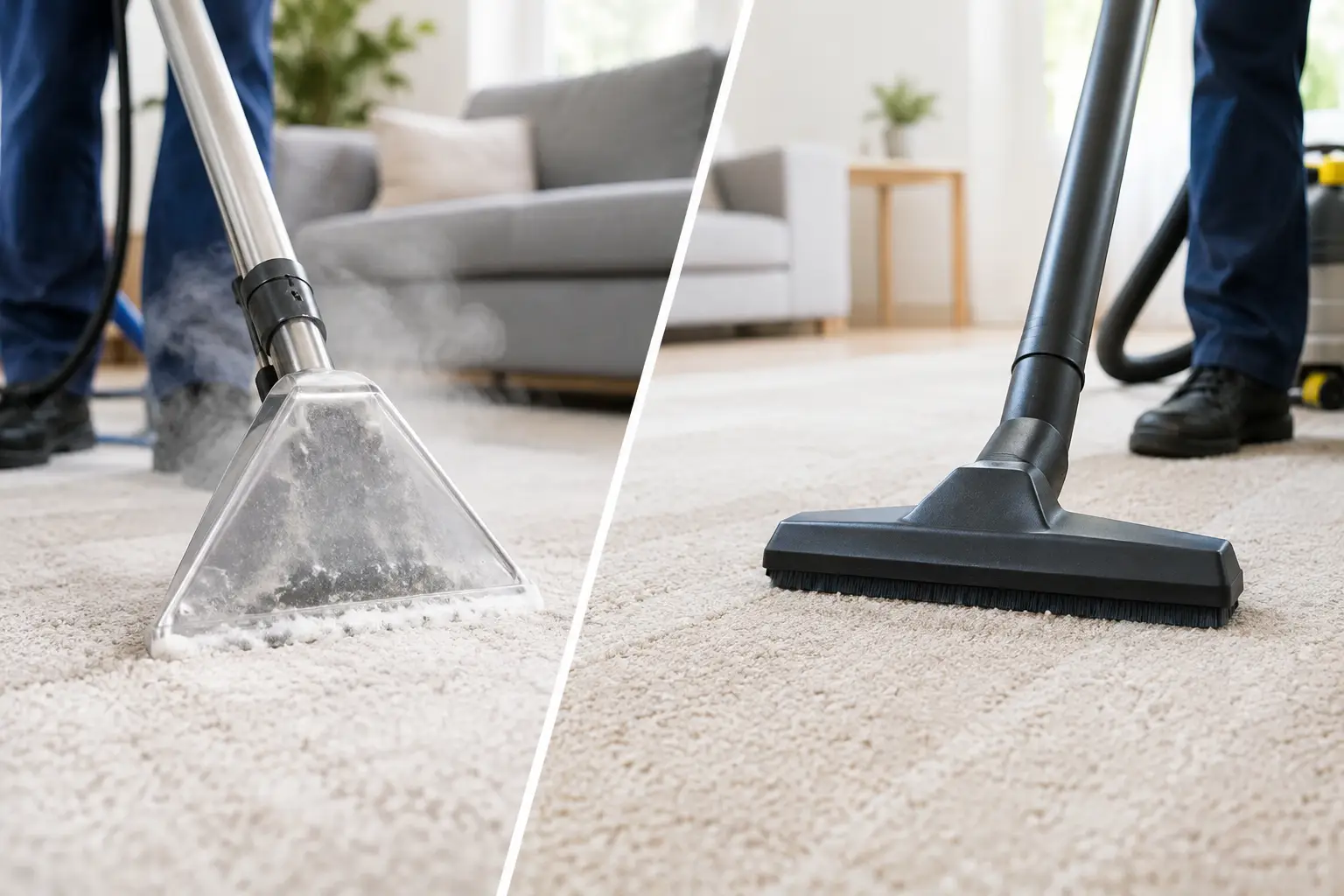
Regular vacuuming is essential. It removes a significant amount of loose, abrasive dry soil before it can settle deeper into the pile. For active homes and commercial spaces, vacuuming high-traffic areas several times a week is often appropriate.
But vacuuming cannot remove bonded oils, sticky residues, embedded fine particles, or contaminants that have moved into the lower part of the carpet. These are the conditions that make carpet look gray, flatten fibers, and cause traffic lanes to reappear quickly. Professional extraction, paired with appropriate preconditioning and agitation, addresses soil that routine maintenance leaves behind.
The goal is not simply to make carpet look brighter for a few days. Proper cleaning should leave fibers cleaner, reduce residue, and support efficient drying. Fast drying is especially important in occupied homes, commercial facilities, and hospitality settings where interruption must be kept to a minimum.
Choose Cleaning Based on Carpet Condition, Not Price Alone
The lowest advertised price may not include the process needed for heavily used carpet. Cleaning results depend on the technician's assessment, equipment capability, water temperature, extraction performance, chemistry, stain treatment, and drying procedures. Delicate fibers, area rugs, wool, and specialty carpets may need different methods than synthetic wall-to-wall carpet.
Ask whether the provider can identify fiber type, address odor sources, manage pet contamination, and respond appropriately if water damage or mold concerns are discovered. IICRC-trained technicians and professional-grade systems provide a higher level of assurance for properties where appearance, health, and asset protection matter.
At Prochem Bahamas, carpet cleaning is approached as part of a broader restorative cleaning capability. That matters when a simple maintenance visit reveals a deeper issue involving moisture, odor, upholstery, air quality, or specialty flooring. One experienced provider can assess the condition and recommend the right next step without treating every situation as the same.
Keep Carpet Cleaner Between Professional Visits
A few consistent habits can extend the results of professional cleaning. Use walk-off mats at exterior doors, vacuum before soil becomes visible, and address spills immediately. Furniture pads can help reduce crushing in frequently used seating areas, while planned furniture movement during cleaning allows more of the carpet to be maintained evenly.
Avoid saturating carpet with rental machines or excessive spot products. Over-wetting can lengthen drying time, and improper detergent rinsing can leave residue that attracts more soil. If a carpet has a persistent smell or a stain that keeps returning, it is usually more cost-effective to have the cause assessed than to continue adding products.
Clean carpet supports the standard people notice when they enter a home, office, villa, hotel, or rental unit. Schedule professional service before soil, odor, or moisture becomes a bigger restoration issue, and your carpet will have a better chance of performing well for its intended life.


Comments