


Residential Flood Recovery Guide for Homeowners
A flooded living room can look manageable once the visible water is gone. That is often when the more expensive problems begin. This residential flood recovery guide explains how to protect your household, limit structural damage, and address moisture before mold, odor, and material deterioration take hold.
Flood recovery is not simply a cleaning job. Water can migrate behind baseboards, under flooring, into drywall cavities, beneath cabinetry, and through HVAC components. A home may appear dry at the surface while moisture remains trapped where it can damage finishes and affect indoor air quality.
Start With Safety Before Cleanup
Do not enter a flooded area until you know it is safe. If water reached electrical outlets, appliances, electrical panels, or wiring, keep clear of the area until a qualified professional confirms it can be entered safely. Turn off power only if the panel is accessible without stepping into water.
The source of the water also determines how the cleanup should be handled. Water from a clean supply line may be recoverable if addressed quickly. Water from a storm surge, overflowing drain, sewage backup, or outside flooding should be treated as contaminated. It can contain bacteria, chemicals, debris, and other hazards that standard household cleaning cannot reliably remove.
Wear protective footwear and gloves when it is safe to begin. Keep children, pets, and anyone with respiratory concerns away from affected rooms. If ceilings are sagging, walls are swollen, or floors feel unstable, leave the area and arrange an assessment before moving furniture or removing materials.
The First 24 to 48 Hours Matter Most
The goal in the first two days is to stop further water entry and begin controlled drying. Fast action matters because porous materials absorb water quickly. Carpet padding, drywall, insulation, particleboard furniture, and wood flooring can retain moisture long after a wet surface has been wiped down.
First, stop the water source if possible. Shut off the supply to a leaking fixture, secure temporary protection around a roof opening, or contact the appropriate emergency utility or property service. Then document the damage with photographs and video before removing items. Capture waterlines on walls, affected belongings, flooring, cabinetry, and the apparent source. This record can support insurance discussions and help a restoration team understand the scope of loss.
Remove standing water using equipment suitable for the amount and type of water present. Small, clean-water incidents may allow for limited extraction and drying. Larger losses and any potentially contaminated water require professional extraction, sanitation, and disposal practices. Household fans alone are rarely enough. They may circulate humid air without removing moisture from the building materials.
A proper drying plan typically uses extraction, air movement, dehumidification, and moisture monitoring together. The objective is not to make the room feel dry. It is to return affected materials to an appropriate moisture condition before secondary damage develops.
What to Move and What to Leave in Place
Move dry, undamaged belongings away from the affected area when doing so is safe. Lift furniture off wet flooring with blocks or supports rather than dragging it across the surface. Separate wet rugs, cushions, books, fabrics, and boxed items so air can reach them.
Avoid pulling up flooring, cutting drywall, or removing cabinets without understanding what is wet underneath. Some materials may be saved through prompt, professional drying. Others may need removal because moisture or contamination has penetrated too deeply. The correct decision depends on the water category, how long materials were wet, and the construction of the home.
Assess the Hidden Damage
A residential flood recovery guide must account for what cannot be seen. Water follows gravity, but it also wicks through drywall, trim, insulation, wood framing, and flooring layers. A minor leak on an upper floor can affect ceilings, wall cavities, and rooms below.
Professional moisture meters and thermal imaging help identify damp materials without unnecessary demolition. Readings should be compared across affected and unaffected areas to establish drying targets. This is especially valuable in homes with wood floors, stone surfaces, custom cabinetry, or high-end finishes where careless removal can create additional loss.
Pay close attention to these areas:
Baseboards, wall corners, and drywall near the floor
Wood flooring, subflooring, and carpet padding
Cabinet toe kicks and the back of bathroom or kitchen vanities
Closets, storage rooms, and furniture placed against exterior walls
Air handlers, ducts, vents, and insulation exposed to moisture
If water entered through a roof, window, exterior door, or foundation opening, inspect adjacent rooms as well. Humidity can spread beyond the original flood zone, particularly in tightly closed homes after a storm.
Prevent Mold Before It Becomes a Larger Remediation Project
Mold can begin growing on wet materials within a short period when moisture remains available. A musty odor, discolored drywall, peeling paint, warped trim, or recurring condensation may indicate that drying was incomplete. Do not assume a deodorizer or surface disinfectant resolves the underlying condition. Odor control is useful only after the moisture source and affected materials have been properly addressed.
The most reliable mold prevention strategy is complete drying, not masking the symptoms. That means extracting water, controlling humidity, opening contained cavities when warranted, and verifying moisture levels over time. In some cases, drying equipment must remain in place for several days. Removing it early because the room looks better can allow hidden moisture to persist.
For a small clean-water spill caught immediately, homeowners may be able to dry hard, nonporous surfaces safely. Larger areas, contaminated water, visible mold, or water-damaged drywall and insulation call for trained remediation. Disturbing moldy materials without containment can spread spores to unaffected rooms and complicate cleanup.
Clean, Sanitize, and Restore in the Right Order
Flood recovery should follow a sequence: remove water, dry the structure, clean and sanitize affected surfaces, then restore finishes and belongings. Reversing that order can waste time and money. For example, installing new baseboards before confirming the wall is dry can trap moisture behind the replacement material.
Different surfaces require different methods. Upholstery, area rugs, carpet, marble, wood floors, tile, grout, and natural stone all respond differently to water and cleaning chemistry. Aggressive scrubbing or the wrong cleaning product can permanently damage delicate fibers, strip finishes, etch stone, or force moisture deeper into wood.
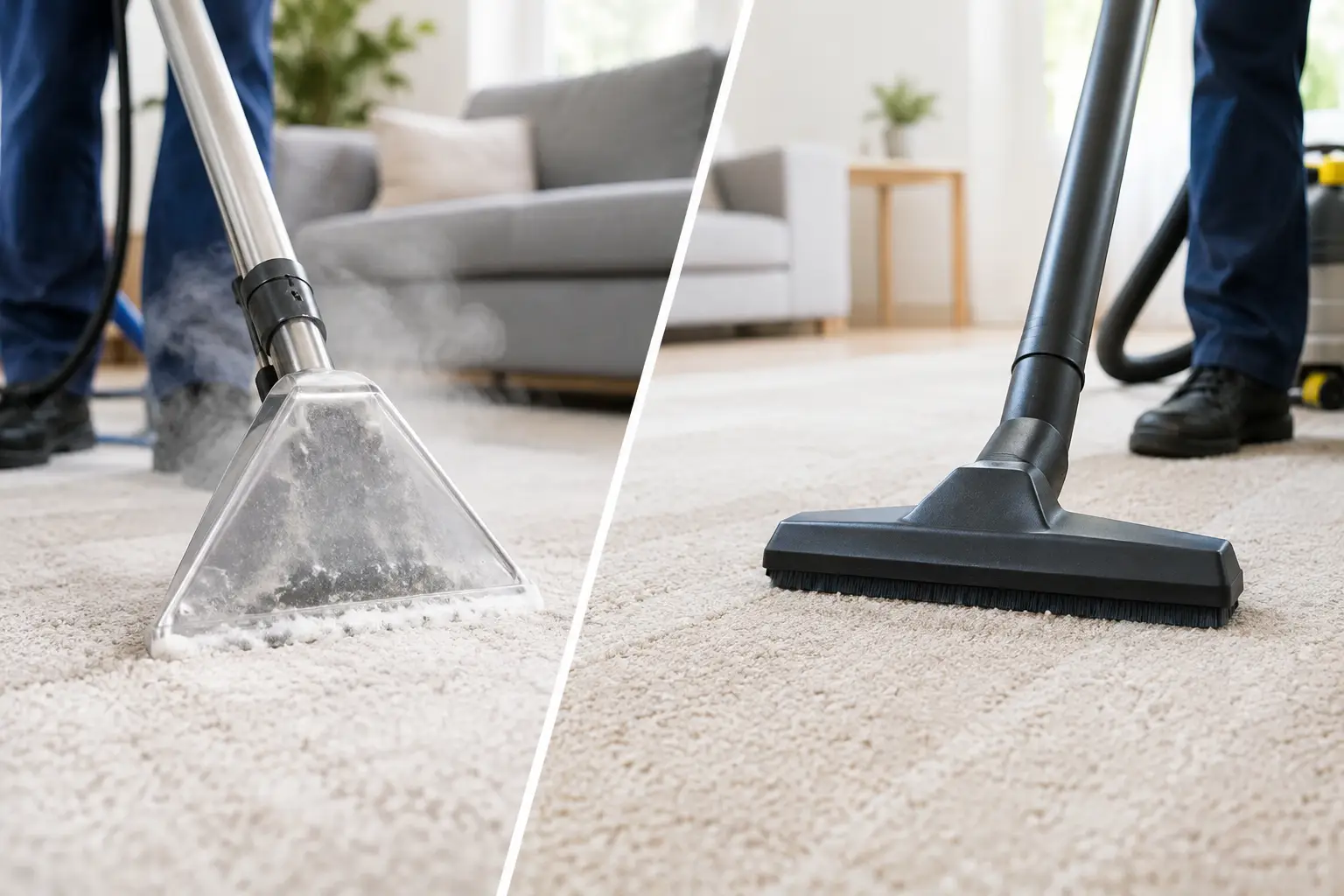
Carpet deserves particular caution. If flooding involved outside water, sewage, or prolonged saturation, carpet and padding may not be salvageable. With a quickly addressed clean-water event, professional extraction and fast-drying systems may preserve some carpeted areas. The decision should be based on contamination level, saturation, time, and the condition of the backing and padding, not on appearance alone.
HVAC systems also need consideration. Do not run equipment that may have been exposed to floodwater. If ducts, registers, air handlers, or filters were affected, they should be inspected before the system circulates air through the home. Moisture and contamination inside an HVAC system can distribute odors and particles long after the original flood is gone.
When Professional Flood Restoration Is the Better Choice
A homeowner can handle limited surface cleanup in the right circumstances, but professional restoration is the safer choice when the water is contaminated, the affected area is extensive, materials have been wet for more than a day, or moisture may be hidden. It is also advisable when valuable finishes, hardwood floors, specialty rugs, or upholstered furnishings are involved.
An experienced restoration provider should bring more than pumps and fans. Look for trained technicians, appropriate extraction and drying equipment, moisture documentation, containment capability, and a clear plan for cleaning, sanitizing, and restoring affected areas. IICRC-aligned practices provide a useful benchmark for water damage and mold remediation work.
For Nassau and Family Island property owners, Prochem Bahamas provides restorative cleaning and water damage remediation with the technical equipment needed to manage difficult moisture, odor, carpet, upholstery, surface, and indoor environmental concerns under one roof.
Protect the Home After Drying Is Complete
Recovery does not end when equipment is removed. Watch repaired areas over the next several weeks for musty odors, staining, cupping wood floors, peeling finishes, or unusual humidity. Keep records of moisture readings, photos, invoices, and any removed materials, particularly if you are working through an insurance claim or managing a rental property.
Once the immediate work is complete, address the condition that allowed water in. That may mean repairing roof flashing, resealing windows, improving drainage, servicing plumbing, maintaining gutters, or reviewing the placement of appliances and supply lines. A small corrective repair now is far less disruptive than another flooded room later.
The best outcome is not simply a home that looks clean after a flood. It is a home that has been properly dried, carefully assessed, and restored with confidence that moisture is no longer working out of sight.


Comments