

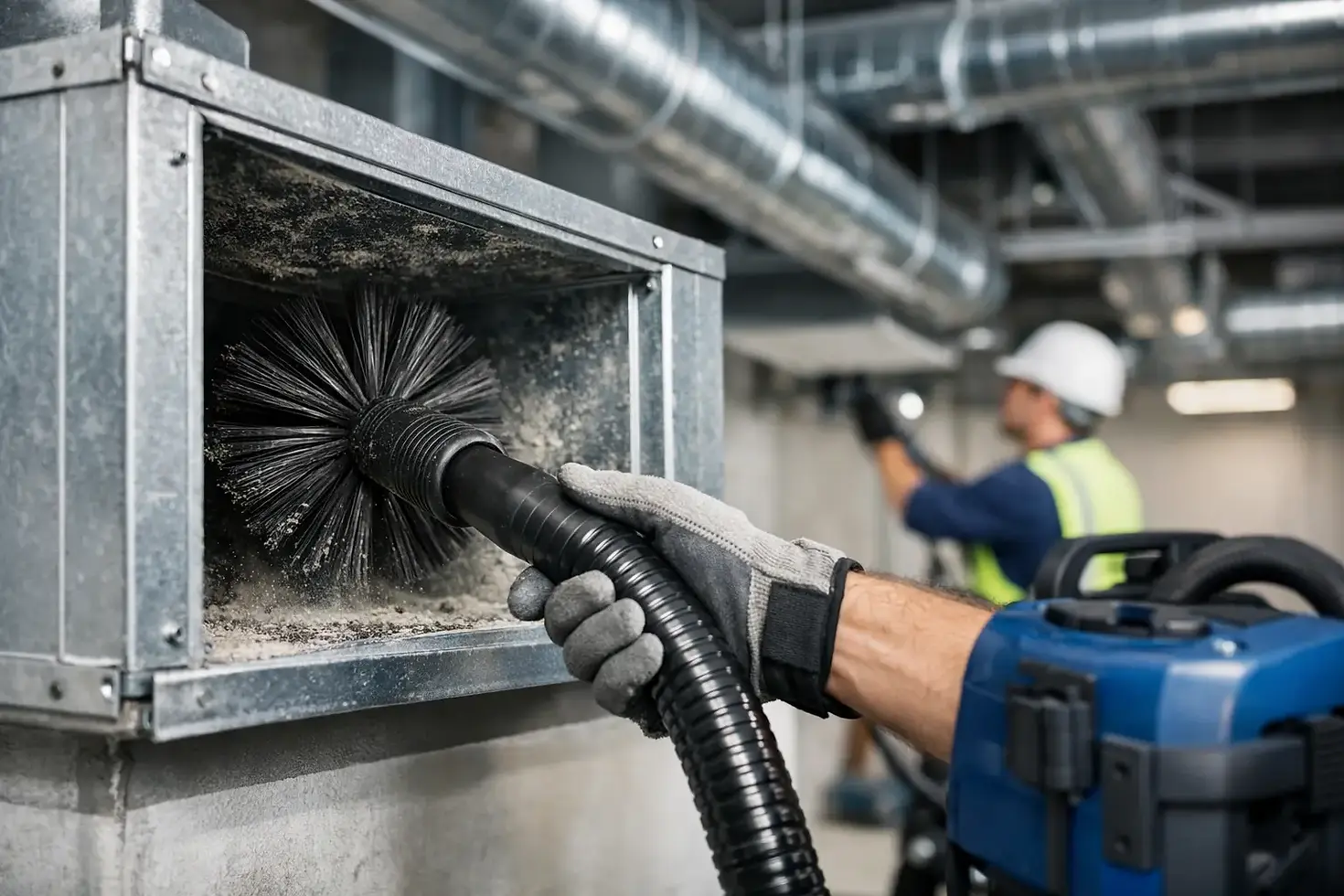
How Often Should Commercial HVAC Ducts Be Cleaned?
A commercial HVAC system can move thousands of cubic feet of air every minute. If that air is passing through ductwork lined with dust, debris, moisture, or microbial growth, the problem does not stay hidden for long. Occupants notice odors, housekeeping teams battle recurring dust, and facility managers start seeing pressure on indoor air quality, system efficiency, and tenant comfort. That is why one of the most common questions from property managers and operators is how often should commercial HVAC ducts be cleaned.
The short answer is this: most commercial buildings should have their ductwork professionally inspected on a routine schedule and cleaned based on actual conditions, not a fixed one-size-fits-all calendar. In many facilities, that means every 3 to 5 years is reasonable. In higher-risk environments, cleaning may be needed much sooner.
How often should commercial HVAC ducts be cleaned in real-world settings?
A set interval sounds simple, but commercial buildings do not operate under simple conditions. A lightly used office with good filtration and strong maintenance practices can go longer between cleanings than a restaurant, healthcare space, school, hotel, retail center, or post-construction property.
For many standard commercial properties, a 3-to-5-year cleaning cycle is a practical benchmark. That said, benchmark does not mean rule. If contamination is visible, if airflow has been affected, or if there has been a water event, mold issue, fire residue, or renovation dust, waiting for a future date on the calendar is the wrong approach.
Professional inspection matters because duct systems collect different types of buildup depending on the environment. Some hold mostly fine dust. Others accumulate heavier debris, greasy residue, moisture-related contamination, or particulates from construction and occupant traffic. The right cleaning schedule starts with the conditions inside the system, not assumptions from the outside.
What determines how often commercial HVAC ducts should be cleaned?
Usage is one of the biggest factors. Buildings with long operating hours, high occupancy, frequent door openings, or heavy foot traffic typically load duct systems faster than low-traffic administrative spaces. Hospitality and mixed-use environments are especially demanding because comfort expectations are high and the system is under constant use.
Filtration also makes a major difference. A well-maintained HVAC system with quality filters changed on schedule will generally keep ducts cleaner longer. If filters are poorly fitted, low-grade, overloaded, or not replaced consistently, more particulate will move downstream into the ductwork.
The building’s environment matters just as much. Coastal humidity, airborne salt, moisture intrusion, mold risk, and seasonal weather patterns can all affect duct conditions. In humid regions, any issue involving condensation or water entry should be taken seriously because moisture changes the equation quickly. Dust alone is one thing. Dust plus moisture is another.
Then there is the type of business. A medical office, food service operation, school, industrial facility, fitness center, or hotel each places different demands on the air system. Some spaces generate more airborne particles. Others have stricter cleanliness expectations or more sensitive occupants. In those cases, shorter inspection and cleaning cycles are often justified.
Signs your commercial ducts may need cleaning now
The most reliable schedule is still condition-based. If the system is showing signs of contamination, service should be evaluated regardless of when the ducts were last cleaned.
Visible dust discharge from supply vents is one warning sign. Persistent musty or stale odors when the HVAC turns on is another. If occupants are reporting uneven airflow, increased dust settling on surfaces soon after cleaning, or worsening indoor air complaints, the duct system should be inspected.
You should also act sooner if there has been:
Water intrusion or flood-related moisture
Mold growth in or around HVAC components
Fire or smoke contamination
Major renovation or construction work
Pest activity in the duct system
Long periods of deferred HVAC maintenance
These situations are not routine maintenance issues. They are contamination events, and they often call for a more immediate professional response.
Why waiting too long creates bigger problems
Dirty ductwork is not always the sole cause of poor indoor air quality, but it can absolutely contribute to it. Once debris builds up inside the system, normal HVAC operation can circulate particulates through occupied areas. In properties where presentation, comfort, and occupant confidence matter, that becomes an operational issue as much as a maintenance one.
There is also the equipment side of the equation. Duct contamination often appears alongside neglected HVAC components such as coils, registers, blowers, and air handling units. When airflow is restricted or critical parts are burdened by buildup, the system may have to work harder to deliver the same performance. That does not automatically mean every dirty duct system is driving major energy waste, but in many facilities, poor cleanliness and poor efficiency tend to show up together.
The longer contamination sits, the more likely it is to become harder and more expensive to address. Fine dust can become impacted. Moisture-related problems can spread. Odors can become embedded. A timely cleaning is usually more straightforward than remediation after the system has been compromised.
Commercial properties that often need more frequent duct cleaning
Some buildings should plan for more frequent review from the outset. Hotels, healthcare environments, schools, restaurants, fitness facilities, and high-traffic retail sites usually face heavier airborne loads than a standard office suite. Post-construction buildings also deserve special attention because renovation dust travels farther than many managers expect.
Facilities with older HVAC infrastructure may need closer monitoring as well. Aging systems are not automatically dirty, but worn seals, inconsistent maintenance history, and past moisture events can make them more vulnerable. The same goes for buildings with recurring complaints about dust or odor that never seem fully resolved through surface cleaning alone.
In these settings, annual or biannual inspection may be appropriate, with cleaning scheduled as conditions warrant. That approach is more effective than defaulting to a long interval and hoping for the best.
Inspection first, cleaning second
One common mistake is treating duct cleaning like a routine janitorial task. It is not. Commercial HVAC duct cleaning should begin with proper assessment of the entire system, including supply and return ducts, air handling components, registers, and any signs of moisture or biological growth.
That matters because not every dusty-looking vent means the whole duct network requires full cleaning, and not every clean-looking grille means the system is fine. Surface appearance can be misleading. A qualified provider should determine what is actually inside the ductwork, whether contamination is localized or system-wide, and whether related HVAC components also need attention.
This is where technical capability matters. Commercial duct cleaning is not just about suction. It requires the right agitation methods, negative air collection, containment practices, and experience working in occupied business environments without creating cross-contamination or unnecessary disruption.
How to set the right cleaning schedule for your facility
A practical plan usually starts with three questions: What type of building is this, what conditions has the HVAC system been exposed to, and what are occupants experiencing now?
If the property is relatively clean, filtration is well managed, and no unusual events have occurred, a scheduled inspection program with cleaning every few years may be enough. If the facility has experienced moisture, smoke, mold concerns, heavy occupancy, or renovation activity, the timeline should tighten.
For property managers and facility operators, the best approach is to build duct inspection into broader preventive maintenance. That creates a record of system condition and reduces the guesswork. Instead of asking only how often should commercial HVAC ducts be cleaned, the better question becomes whether the system is staying clean enough to support healthy airflow, reliable performance, and a professional indoor environment.
Experienced restorative cleaning specialists can help make that call with evidence, not sales pressure. For businesses in Nassau and the Family Islands, Prochem Bahamas approaches HVAC and duct cleaning as part of a larger indoor environmental strategy, especially where moisture, odor, mold risk, or post-construction contamination may also be in play.
A clean-looking lobby does not guarantee clean air behind the ceilings. If your building is showing signs of recurring dust, odor, or airflow issues, it may be time to stop relying on the calendar alone and have the system evaluated properly.


Comments