

Does Cleaning Your Air Ducts Help Air Flow?
- Patrick Petty
- 6 days ago
- 6 min read
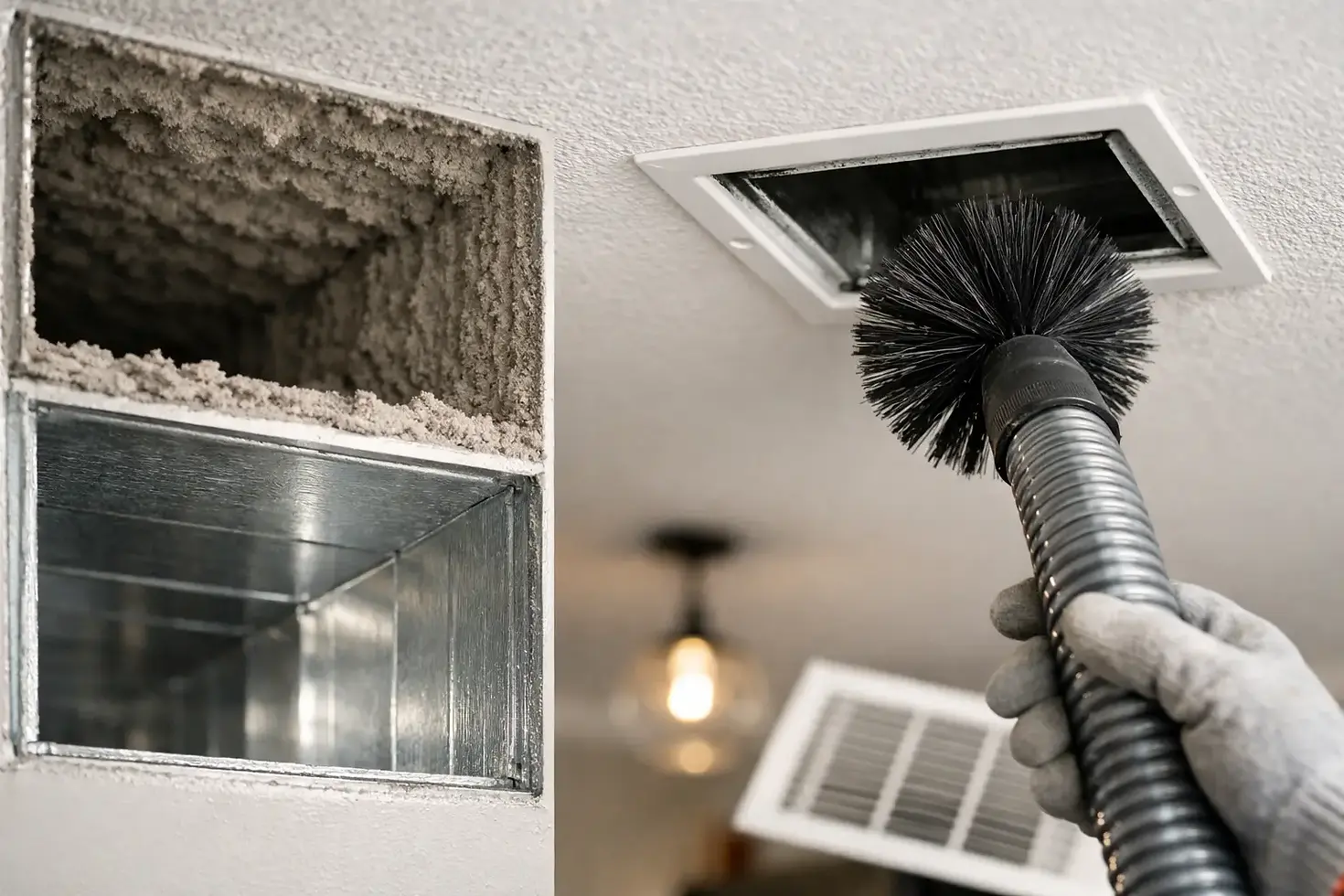
If some rooms feel stuffy while others cool slowly, it is reasonable to ask: does cleaning your air ducts help air flow? Sometimes it does. But not in every system, and not for every comfort problem. Air duct cleaning can improve airflow when dust, debris, construction residue, pest material, or microbial contamination has built up enough to restrict passage through the duct system or affect HVAC components. If the real issue is poor duct design, leaking ducts, a failing blower, or a clogged filter, cleaning alone will not fix it.
That distinction matters for homeowners, property managers, and facility operators. Airflow problems are often blamed on the ducts because they are out of sight. In practice, restricted airflow usually comes from a combination of factors inside the HVAC system, not just from dirty duct walls.
Does cleaning your air ducts help air flow in real conditions?
Yes, but only when contamination is substantial enough to interfere with system performance. In a lightly dusty system, cleaning may improve cleanliness but have little measurable effect on airflow. In a heavily contaminated system, especially after renovations, water intrusion, pest activity, or long-term neglect, professional duct cleaning can remove blockages and reduce strain on the system.
The key is understanding what “dirty ducts” actually means. A thin film of ordinary household dust along sheet metal does not usually choke airflow. A buildup of matted debris, collapsed internal lining, clogged return pathways, or contamination at the blower, evaporator coil, and registers is different. Those conditions can reduce air movement and lead to uneven temperatures, longer run times, and more stress on the equipment.
Where airflow is really lost
Most airflow complaints do not begin deep inside the duct runs. They begin at the filter, blower assembly, evaporator coil, or at poorly sealed or poorly designed ducts. That is why a proper inspection matters before any cleaning is recommended.
A clogged air filter is one of the most common causes of weak airflow. If the filter is overloaded, the system cannot pull enough return air. A dirty blower wheel can also reduce the amount of air the fan moves. A contaminated evaporator coil can be even more serious because it restricts airflow right at a critical point in the system. In those cases, cleaning the ducts without addressing the mechanical restrictions leaves the main problem in place.
Leaky ducts are another major issue. If conditioned air is escaping into ceilings, attics, wall cavities, or utility spaces, cleaning the ducts may make the system cleaner, but it will not restore lost delivery. The same applies if a duct is crushed, disconnected, undersized, or poorly routed.
When duct cleaning is most likely to improve airflow
There are clear situations where professional air duct cleaning can make a noticeable difference. One is post-construction contamination. Drywall dust, sawdust, and renovation debris can settle in the duct system and at the registers, then recirculate or restrict flow.
Another is moisture-related contamination. If ducts have been exposed to high humidity, condensation, or water intrusion, debris can cling to surfaces and microbial growth may develop. In systems with flexible ducts or internally lined ducts, contamination can become more problematic because particles and moisture can hold in the material more easily than in smooth metal.
Pest activity is also a strong reason for cleaning. Nesting material, droppings, and other debris can obstruct sections of ductwork and create sanitation concerns. In commercial and hospitality settings, this is not just a comfort issue. It can affect indoor environmental quality and tenant or guest perception.
Heavy buildup around supply and return grilles is another clue. If visible dust is accumulating quickly and rooms feel under-served by the HVAC system, the problem may extend deeper into the system. In those cases, cleaning can improve both airflow and cleanliness, particularly when paired with cleaning of related HVAC components.
When cleaning your air ducts will not solve the problem
This is where many property owners waste money. If the system is struggling because of poor design, damaged ductwork, low refrigerant, a weak motor, a closed damper, or an oversized or undersized unit, duct cleaning will not correct the underlying fault.
For example, if one room never gets enough air because the branch duct is too small, cleaning may have little effect. If a commercial property has balancing issues across zones, the fix may involve dampers, controls, or redesign. If the evaporator coil is impacted and the blower compartment is dirty, focusing only on the ducts leaves major restrictions untouched.
That is why an expert approach matters. Airflow is a system issue, not a single-service issue. The right answer starts with diagnosis, then the correct combination of cleaning, mechanical service, and repair.
Signs your ducts may be affecting airflow
There are several signs that make professional inspection worthwhile. One is reduced airflow at multiple vents, especially if it has worsened over time. Another is excessive dust discharge when the system starts. Persistent musty odors can also point to contamination inside the duct system or HVAC components.
You may also notice longer cooling cycles, rooms with uneven temperatures, or registers that deliver noticeably weaker air than they used to. After remodeling, storm-related moisture exposure, smoke events, or prolonged vacancy, inspection becomes even more important. These conditions can leave debris and contamination in places that routine housekeeping cannot reach.
In higher-demand environments such as offices, restaurants, multi-unit properties, and hospitality spaces, airflow complaints often show up first as occupant discomfort. Guests say the room feels humid. Staff report hot spots. Tenants adjust thermostats repeatedly. Those symptoms do not prove dirty ducts, but they are valid reasons to inspect the entire air distribution system.
What professional duct cleaning should include
Effective duct cleaning is not a shop vacuum at the vent. A professional process should involve inspection, source removal, and containment methods designed for HVAC systems. The goal is to dislodge and capture debris without spreading it into occupied space.
A qualified provider should assess supply and return ducts, grilles, diffusers, and accessible HVAC components that affect system cleanliness and performance. Depending on the condition of the system, this may include the air handler, blower compartment, drain areas, and coil surfaces. The work should be matched to the type of duct material and the level of contamination.
This is especially important in properties dealing with mold concerns, smoke residue, or water damage. In those cases, duct cleaning may be one part of a broader indoor environmental response. Cleaning without correcting the moisture source or related contamination is not a complete solution.
The airflow benefit is often indirect
One reason this topic gets confusing is that the improvement is not always dramatic at the vent. Sometimes the benefit of cleaning is indirect. Removing debris from key parts of the HVAC system can reduce system strain, support more consistent circulation, and help the equipment operate closer to its intended performance.
That can translate into better comfort, cleaner discharge air, and fewer complaints about stale rooms or uneven temperatures. It may also help protect equipment from premature wear when contamination has been forcing the system to work harder than necessary.
Still, professional companies should be careful with claims. Duct cleaning is not a cure-all. It is a targeted service that delivers the best results when there is confirmed buildup, obstruction, or contamination and when it is combined with correction of any mechanical or duct-related defects.
How to decide if your property needs it
The best decision is based on inspection, not assumption. If airflow has dropped, if indoor dust seems excessive, if odors are coming through the vents, or if the property has had renovation work, moisture problems, smoke exposure, or pest activity, an HVAC and duct inspection is justified.
For residential owners, that means looking beyond visible vent dust. For property managers and facility operators, it means treating airflow as part of building performance. A clean system, properly maintained, supports comfort, indoor environmental quality, and operational reliability.
An experienced restorative cleaning specialist can identify whether the issue is actual duct contamination, HVAC component buildup, or a larger system fault. That is the difference between buying a cleaning service and solving the problem.
If you are asking whether cleaning your air ducts helps air flow, the most accurate answer is this: it helps when dirt, debris, or contamination is truly restricting the system, and it does little when the real problem lies elsewhere. The right next step is not guessing. It is getting the system evaluated by professionals who understand ducts, HVAC performance, and indoor environmental conditions all under one roof.


Comments