

Wood Floor Deep Cleaning That Protects Finish
- Patrick Petty
- 4 hours ago
- 5 min read
Fine wood flooring can make a residence, hotel lobby, office, or rental property look exceptionally well maintained. But in high-traffic spaces, ordinary mopping often leaves behind the very problems owners want to avoid: dullness, dark traffic lanes, sticky residue, and grit working against the finish. Professional wood floor deep cleaning addresses that buildup without treating a finished wood surface like tile.
The distinction matters. Hardwood and engineered wood floors are not designed for saturation, aggressive scrubbing, or one-size-fits-all chemicals. A successful service restores a cleaner, more even appearance while protecting the finish that shields the wood beneath it.
Why Wood Floors Need More Than Routine Mopping
A dry mop or vacuum removes loose dust, sand, and hair. A lightly damp microfiber mop can handle routine maintenance. Neither method, however, consistently removes the thin layers of oils, tracked-in soil, cleaning-product residue, and airborne contaminants that accumulate over time.
In Nassau homes and commercial properties, humidity, open entryways, beach sand, and frequent foot traffic can speed up the process. Grit is especially damaging because it acts like fine sandpaper under shoes, furniture feet, and rolling equipment. The floor may still look clean from a distance, yet appear hazy or worn when sunlight reaches it.
Deep cleaning is not a substitute for refinishing a floor with true finish failure. If the coating has worn through, boards are deeply scratched, moisture has penetrated seams, or the wood has changed color from water damage, cleaning alone cannot reverse those conditions. It can, however, remove surface contamination so the actual condition of the floor is clear and the right next step can be chosen.
What Professional Wood Floor Deep Cleaning Involves
The first step is evaluation. A trained technician identifies whether the floor is solid hardwood, engineered wood, laminate, or another wood-look material. Just as important, they assess the finish, traffic patterns, visible residue, scratches, gaps, and signs of moisture exposure. These details determine which cleaning chemistry, agitation method, and moisture level are appropriate.
A professional process typically begins with thorough dry soil removal. Fine debris is removed from the field of the floor, edges, corners, and transitions, where household tools frequently leave material behind. This matters because wet cleaning over remaining grit can create unnecessary abrasion.
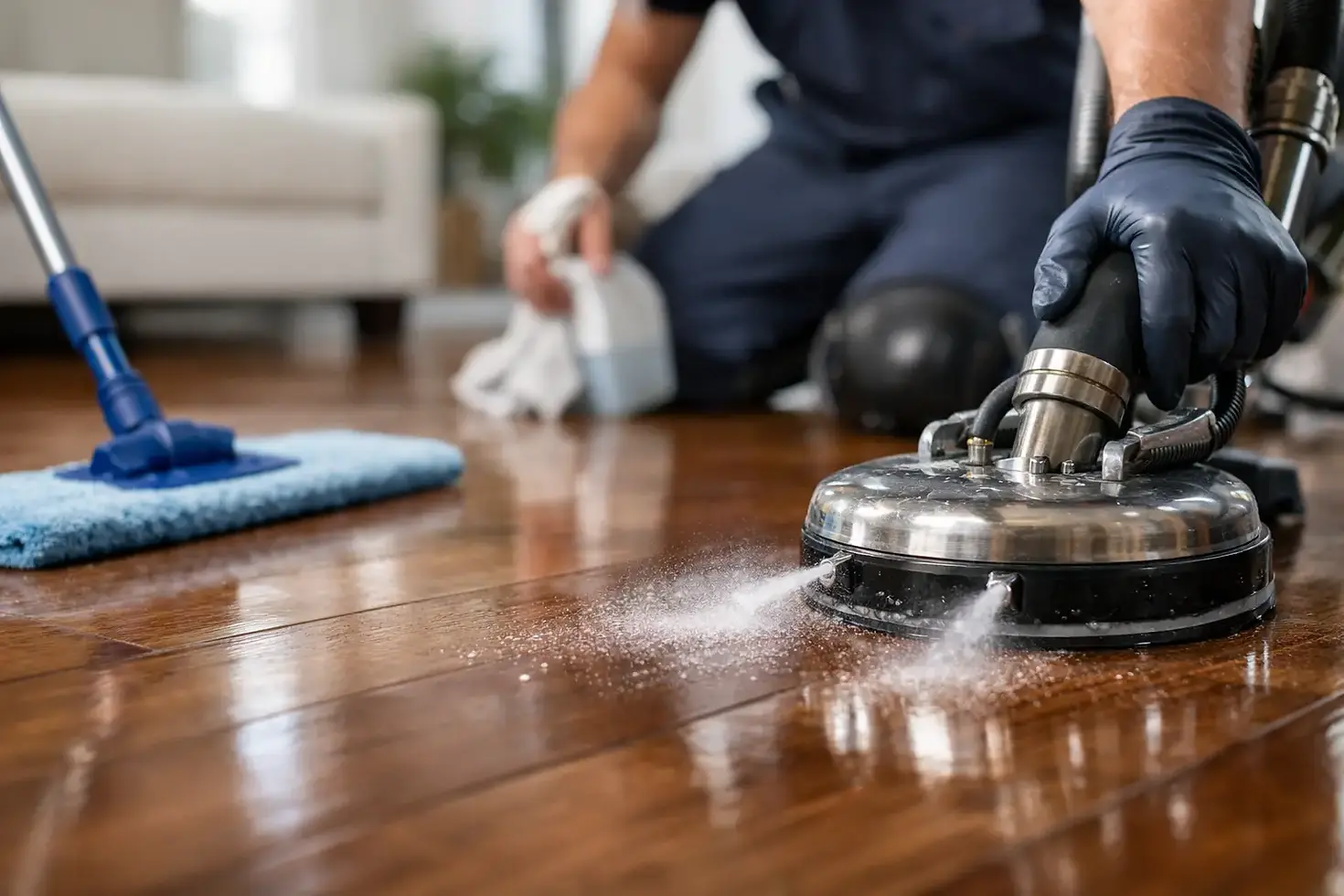
Next, a wood-safe cleaning solution is applied in a controlled amount to break down adhered soil and residue. The goal is controlled surface cleaning, not flooding. Specialized equipment and pads lift contamination from the finish while minimizing moisture contact and avoiding harsh abrasion. Soil is then collected rather than spread across the floor with a dirty mop head.
The final result should dry quickly and leave no sticky film. Floors that feel tacky after cleaning often have residual product on the surface, which attracts more dirt and makes the finish look dull again sooner.
Cleaning Is Not the Same as Recoating or Refinishing
These services solve different problems. Deep cleaning removes surface soil and residue. Recoating adds a new protective layer when the existing finish is intact but tired. Refinishing involves sanding and replacing the finish system, generally when there is substantial wear, deep scratching, or exposed wood.
Choosing the least invasive effective option is usually best. A property manager may be able to improve the appearance of a lobby floor with restorative cleaning and ongoing maintenance rather than disrupt operations with refinishing. On the other hand, cleaning a floor that has exposed wood or water-related damage may reveal that restoration is needed. The right recommendation depends on the floor's condition, not simply how long it has been since it was cleaned.
Signs Your Floor Is Due for Deep Cleaning
A floor does not need to look severely neglected before it benefits from professional attention. One common sign is a gray or hazy appearance that remains after mopping. Another is darkening in walkways, near exterior doors, around kitchen work areas, or in front of reception desks.
Residue is also a strong indicator. If footprints show easily, socks pick up grime, or the surface feels slightly sticky despite repeated cleaning, the problem may be buildup from unsuitable products. Oil soaps, waxes, and excessive cleaner can create a film that changes the floor's sheen and complicates future maintenance.
For commercial and hospitality properties, uneven appearance between high-traffic and low-traffic zones is often the first concern. In homes, the change may be most noticeable near pet areas, dining spaces, entryways, and hallways. Addressing this buildup early helps protect the floor's presentation and may reduce the need for more extensive corrective work.
Methods to Avoid on Finished Wood Floors
Wood flooring is durable, but its finish has limits. Steam mops are a frequent concern. Even when a manufacturer claims a steam device is appropriate for sealed floors, heat and moisture can force their way into seams, especially on aging or engineered floors. This can contribute to cupping, edge lifting, hazing, or finish issues over time.
Avoid soaking the floor with water, using a dripping mop, or applying cleaning solution directly across a large area. Excess liquid can enter gaps and board edges before it is wiped away. Abrasive scrub pads, powdered cleaners, and strong alkaline or solvent-based products can also damage the finish or leave it permanently dull.
Wax should not be applied to polyurethane-finished floors unless the flooring manufacturer specifically calls for it. Wax buildup can make a floor difficult to recoat and may cause uneven sheen. If the floor's finish type is unknown, testing a discreet area and using a specialist's assessment is the safer approach.
Protect the Results Between Professional Services
Deep cleaning works best as part of a practical maintenance plan. Entrance mats should capture grit before it reaches the flooring, and the mats themselves should be cleaned frequently so they continue to perform. Felt pads under chairs and furniture reduce scratches, while protective mats under rolling office chairs help in work areas.
Routine dry removal is equally important. Vacuum using a hard-floor setting or a soft brush attachment, or use a clean microfiber dust mop. Clean spills promptly with a lightly damp cloth, then dry the area. For routine damp cleaning, use only a product intended for the specific flooring finish and follow its dilution directions closely.
The maintenance schedule depends on use. A busy restaurant, resort corridor, retail space, or office reception area may need frequent professional evaluation. A carefully maintained residence may need deep cleaning less often, but entryways and other high-use zones may still require targeted service. The goal is to respond to visible soil and changing floor appearance before embedded contamination becomes a larger issue.
When Cleaning Becomes a Restoration Concern
Some wood floor issues point beyond standard cleaning. Cupping, buckling, black staining, persistent odor, or separation at board edges can indicate moisture intrusion. Water from plumbing leaks, storm events, appliance failures, or humidity problems can affect both the flooring and the materials below it.
In those cases, applying more cleaner is not the answer. The source of moisture must be identified, the affected area evaluated, and drying or remediation steps considered where needed. Floors exposed to smoke, mold-related moisture, or contaminated water require particularly careful handling because appearance is only one part of the problem.
For properties managing several surface types or responding to water-related events, a single experienced provider can make coordination easier. Prochem Bahamas brings restorative cleaning capability, specialized equipment, and IICRC-informed service to wood floors and the related cleaning or remediation concerns that can affect them.
A clean wood floor should look cared for, not coated over. When the cleaning method respects the finish, controls moisture, and removes soil instead of redistributing it, the floor remains easier to maintain and more prepared for the years of use ahead.


Comments