

Upholstery Cleaning for Smoke Smell That Works
Smoke odor in furniture has a way of lingering long after the visible signs are gone. Upholstery cleaning for smoke smell is not just about making a sofa or chair smell better for a few days - it is about removing oily smoke residue, trapped particles, and the odor sources buried in the fabric, padding, and frame.
That distinction matters in homes, offices, hotels, and managed properties. A room can look clean and still carry a stale, burnt, or ashy smell that affects comfort, guest experience, and indoor air quality. If smoke exposure came from a fire, repeated cigarette use, or a kitchen incident, the right cleaning method depends on what the fabric absorbed and how deeply the contamination traveled.
Why smoke smell stays in upholstery
Smoke is more than a smell. It leaves behind fine particulate matter, oils, resins, and acidic residues that cling to textile fibers and porous materials. Upholstered furniture is especially vulnerable because it combines fabric, cushioning, batting, wood, and hidden crevices that all capture contamination.
When people try to solve the problem with air fresheners or a light shampoo, the odor often returns. That is because the source is still present below the surface. Smoke residues can also reactivate in humid conditions, which is a common issue in warm coastal environments. Furniture that seemed acceptable one day may start releasing odor again when moisture in the air rises.
The type of smoke also changes the treatment plan. Dry smoke from a fast-burning fire behaves differently from wet smoke produced by slow, smoldering materials. Tobacco smoke leaves sticky yellowish residues and a persistent odor profile. Protein smoke from burned food can be nearly invisible but extremely penetrating. Each one requires a different level of cleaning, deodorization, and judgment.
What effective upholstery cleaning for smoke smell involves
Proper odor removal starts with inspection, not guesswork. The first step is identifying the upholstery fiber, dye stability, level of soiling, and whether the smoke contamination is limited to the surface or has moved into the cushion cores and internal structure.
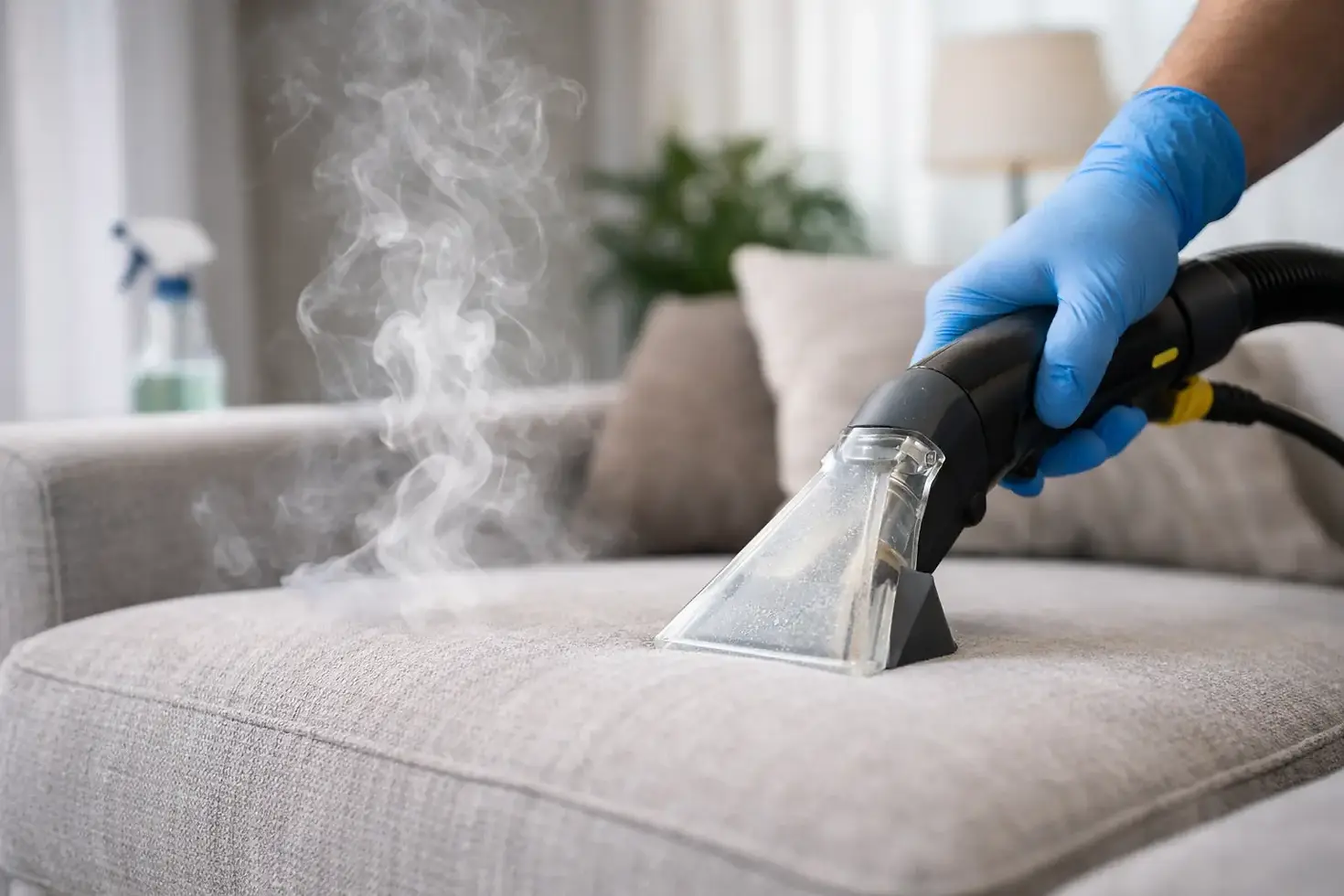
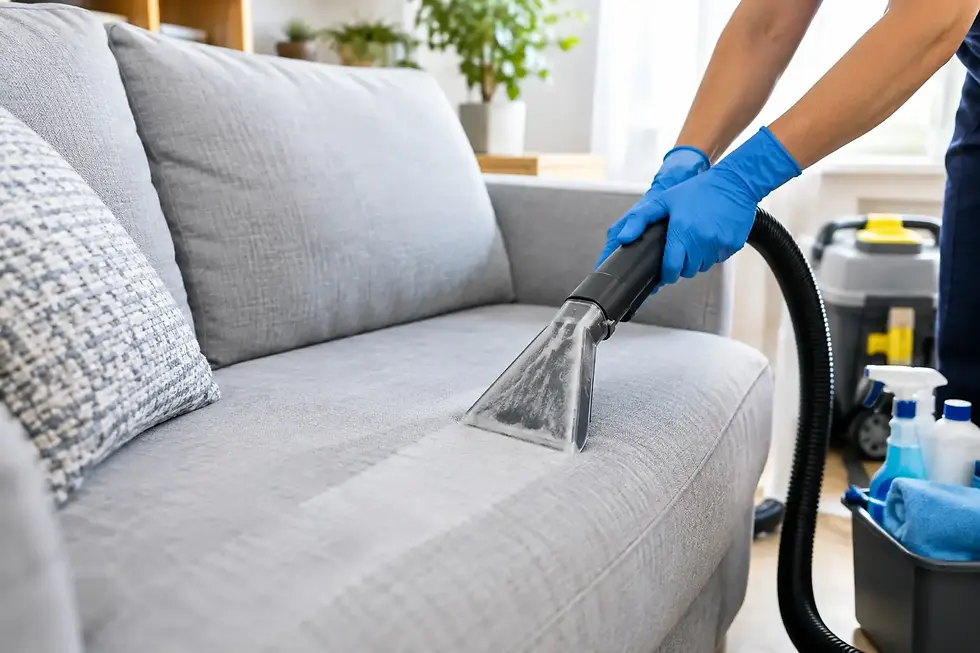
A professional process typically begins with dry soil and particulate removal. This matters because loose soot and debris can smear if moisture is introduced too early. From there, technicians use fabric-appropriate cleaning agents designed to break down smoke residues without damaging the material. The goal is to suspend and extract contamination, not just mask it.
Cleaning the fabric is only part of the job
If the odor is light and recent, thorough extraction cleaning may be enough. But stronger odors often require treatment beyond the visible upholstery surface. Cushion inserts may need separate deodorization. Exposed frames, undersides, and hidden dust covers can hold smoke residue as well. In more severe cases, the furniture may need a multi-step restorative approach rather than standard maintenance cleaning.
This is where equipment and experience make a difference. High-performance extraction systems, controlled moisture application, and fast-drying methods help remove residues while reducing overwetting. That matters because excessive moisture can create its own problems, especially in dense upholstery where drying is slower than it looks.
Deodorization has to match the source
Odor control is not one-size-fits-all. Some situations respond well to targeted deodorizers after cleaning. Others need thermal fogging, hydroxyl or ozone treatment in controlled settings, or enclosure-based deodorization for isolated items. The right choice depends on the source of the odor, the construction of the furniture, and whether the upholstery is part of a larger smoke-damaged environment.
If the room itself still contains smoke contamination in drapes, carpets, HVAC systems, or wall surfaces, furniture cleaning alone may not fully solve the problem. Odors can cross-contaminate cleaned items. That is why smoke odor work often benefits from a broader indoor environmental approach rather than treating one surface in isolation.
When DIY methods fall short
Home remedies are common. Baking soda, vinegar sprays, fabric deodorizers, and consumer steamers are often used first. For minor smells, they may offer temporary improvement. For real smoke contamination, they usually do not remove the underlying residue.
The main issue is penetration. Surface products cannot reliably reach what has settled into cushion fills and internal layers. Some DIY methods can also set stains, distort delicate upholstery, or leave the fabric too wet. Over-the-counter fragrances may make the odor harder to diagnose later because they mix with the smoke smell instead of eliminating it.
There is also a risk in treating expensive or specialty textiles without proper testing. Natural fibers, blended fabrics, and textured weaves can react differently to moisture, solvents, and agitation. What helps one sofa can permanently damage another.
Signs you need professional upholstery cleaning for smoke smell
If the odor returns after airing out the room, the contamination is still there. The same is true if furniture smells stronger when you sit on it, after the air conditioner runs, or during humid weather. Those are signs that smoke residues are embedded below the surface.
Visible discoloration is another warning sign. Yellowing, dullness, or grime on arms, headrests, and cushion edges can point to smoke buildup, especially in spaces exposed to tobacco smoke over time. After a fire or kitchen smoke event, even furniture that looks unaffected may have absorbed odor if it remained in the structure.
For commercial and hospitality settings, timing matters. Smoke odor can affect tenant satisfaction, room turnover, public perception, and readiness for occupancy. In those cases, professional treatment is often the most efficient path because it addresses both cleaning and odor control with a documented process.
What to expect from a professional assessment
A qualified technician should not promise the same result for every piece. Some upholstery responds extremely well to restorative cleaning. Other pieces may improve significantly but still retain traces if smoke exposure was prolonged or if contamination reached non-cleanable internal components.
That kind of honest assessment is important. It protects the client from unrealistic expectations and helps determine whether cleaning, deodorization, or replacement is the better investment. Age, fabric type, smoke source, and the value of the furniture all factor into the recommendation.
For higher-end pieces, sectional seating, and commercial furnishings, a professional evaluation can often preserve assets that owners might otherwise assume are unsalvageable. With the right methods, many items can be restored to a clean, usable condition without the cost and disruption of replacement.
Why certification and equipment matter
Smoke odor removal is part cleaning science and part restoration work. It requires knowledge of fiber identification, residue behavior, deodorization chemistry, and moisture control. That is why certified restorative cleaning specialists are better equipped than general cleaners when smoke is involved.
Professional systems also matter. Strong extraction performance, low-residue cleaning agents, and fast-drying technology improve results while reducing downtime. In occupied homes and active commercial spaces, that balance is essential. The furniture needs to be clean, deodorized, and returned to service as quickly as possible without sacrificing thoroughness.
For properties dealing with broader smoke or fire-related contamination, it is also useful to work with a provider that can address connected issues under one roof. Upholstery, carpets, area rugs, odor control, ductwork, and structural surfaces often influence one another. Treating only one piece of the problem can leave odor behind.
A practical way to protect results after cleaning
Once smoke odor has been professionally addressed, keeping it from returning depends on controlling the surrounding environment. If smoking continues indoors, residues will begin building again. If the source was a fire or heavy kitchen smoke event, make sure adjacent materials and air systems have also been cleaned where needed.
Routine upholstery maintenance helps as well. Soil and oils in fabric can hold onto odors more readily, so scheduled deep cleaning keeps furniture in a better condition to resist future buildup. In busy residences, hospitality spaces, and commercial properties, this is less about appearance alone and more about preserving indoor cleanliness over time.
At Prochem Bahamas, this kind of work is handled as restorative cleaning, not cosmetic cleaning. That means choosing methods based on material type, contamination level, and the broader condition of the property.
Smoke odor in upholstery rarely fixes itself with time. If the furniture still carries that stale, burnt smell, the most useful next step is a professional assessment that identifies whether the issue is on the surface, inside the cushions, or part of a larger smoke contamination problem.


Comments