

How to Sanitize HVAC Vents Without Spreading Dust
- Patrick Petty
- Jul 31
- 5 min read
A vent cover with a gray film of dust is not just a housekeeping issue. It can be a visible sign that the HVAC system is moving settled debris through occupied spaces. Knowing how to sanitize HVAC vents can help improve surface cleanliness and reduce odors, but it also requires care. The wrong methods can push contaminants deeper into the system, introduce excess moisture, or damage components that should be handled by a qualified HVAC or remediation professional.
For homeowners, property managers, hotels, and commercial facilities, the right approach begins with understanding what can be cleaned safely at the vent and what requires a full duct and HVAC cleaning service.
First, Know the Difference Between Vents and Ductwork
Supply vents deliver conditioned air into a room. Return vents pull air back toward the HVAC system. The visible grilles or registers are often called vents, but they are only the entry and exit points of a much larger system of ducts, coils, drain pans, air handlers, and filtration components.
Cleaning a vent cover can remove dust, fingerprints, and light surface residue. It does not sanitize the ductwork behind it, and it will not correct contamination on an evaporator coil, inside an air handler, or in a moisture-affected duct system. That distinction matters when there are persistent odors, visible mold-like growth, water damage, heavy construction dust, pest activity, or recurring respiratory complaints among occupants.
Sanitizing is also not a substitute for removing soil. Disinfectants and sanitizers work only when applied to an appropriate, clean surface and used according to their labeled contact time. Spraying a product into dusty ducts or through a register is not an effective cleaning method and may distribute chemicals through the building.
When Vent Sanitizing Makes Sense
Routine vent-cover cleaning is appropriate when there is ordinary household or facility dust, light residue, or seasonal buildup around registers. It is also useful after renovations, before reopening a seasonal property, or as part of a broader indoor cleaning program.
A deeper assessment is needed if you notice a musty or smoky odor when the system starts, dark spotting that returns quickly, water stains near vents, excessive debris blowing from registers, or dust buildup soon after cleaning. In humid climates, HVAC systems must also manage condensation effectively. A clogged drain line, dirty coil, poor insulation, or air leak can create moisture conditions that support microbial growth inside equipment or ductwork.
If there has been flooding, a roof leak, fire and smoke damage, sewage exposure, or confirmed mold growth, do not treat the issue as a simple vent-cleaning project. The source of contamination and moisture must be identified and corrected before restorative cleaning can produce lasting results.
How to Sanitize HVAC Vents Safely
The safest method focuses on the removable register cover and the immediately accessible surface behind it. Before beginning, turn off the HVAC system at the thermostat. If you are cleaning a return grille that may contain a filter, follow the unit manufacturer’s directions and avoid accessing electrical or mechanical components.
Start by placing a clean towel or drop cloth below the vent. Remove the screws and carefully lift off the grille or register. If it is painted in place or difficult to remove, do not force it. Bent metal, damaged drywall, and loose fasteners can create more work than the cleaning itself.
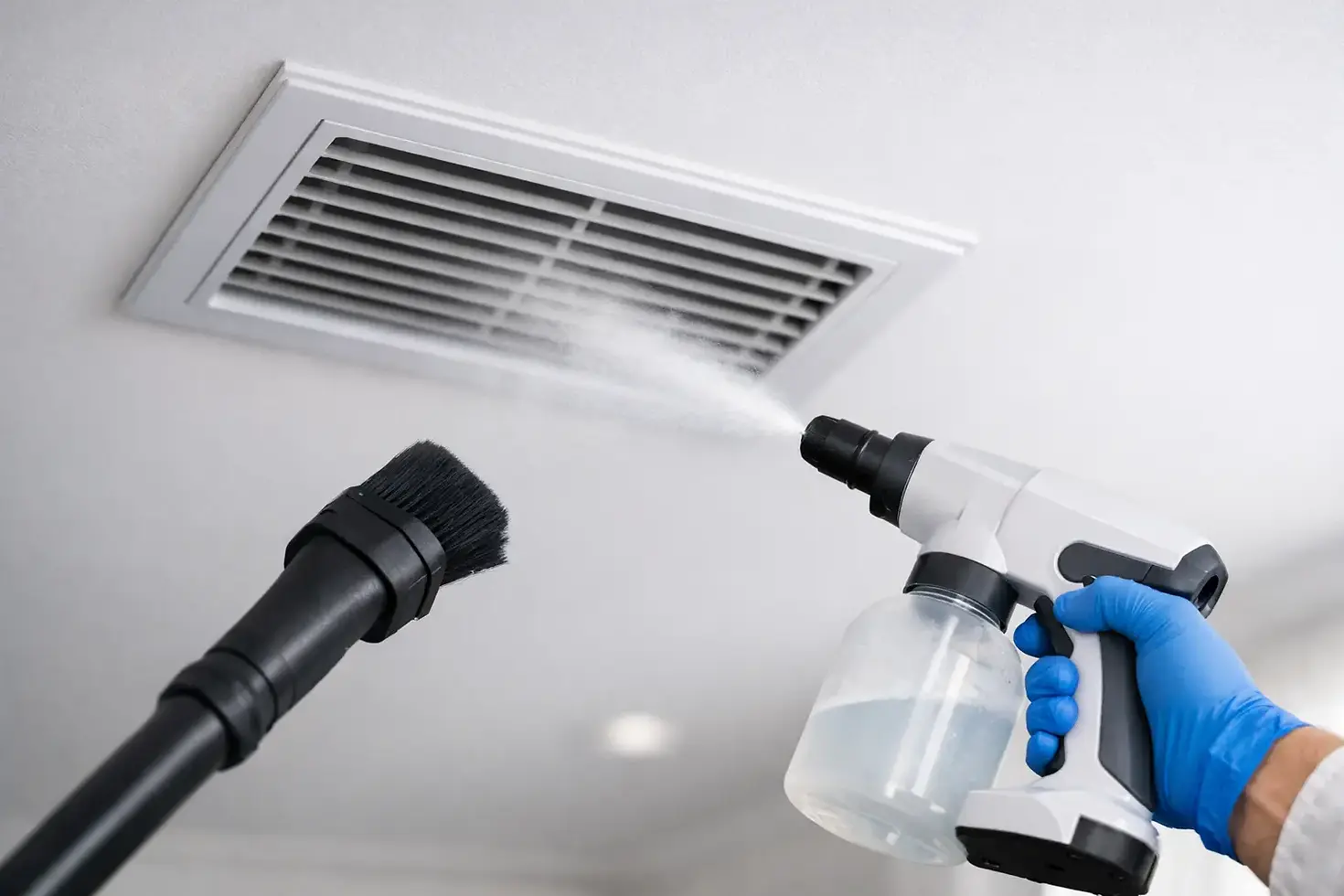
Vacuum the cover with a brush attachment, then use a damp microfiber cloth and a mild cleaner to remove visible soil. For washable metal or plastic covers, cleaning them separately with warm water and a mild detergent is often effective. Rinse them thoroughly and let them dry completely before reinstalling.
Once the cover is clean, vacuum the reachable area just inside the opening using a HEPA-filtered vacuum with a soft brush or narrow crevice attachment. Do not insert household tools, rags, or long flexible brushes deep into the duct. Those methods can dislodge buildup without capturing it, potentially sending dust back into the room when the system restarts.
If sanitizing is warranted, use only an EPA-registered product labeled for the specific surface and application. Apply it to a cloth when possible rather than spraying freely into the vent opening. Follow the product label for dilution, ventilation requirements, dwell time, and surfaces that should not be treated. Never mix cleaning products, particularly bleach with ammonia-based or acidic cleaners.
Allow the register and surrounding area to dry fully. Reinstall the cover, replace the air filter if needed, and restart the system. Check airflow and listen for rattling that may indicate the cover was not secured properly.
What Not to Do Inside an HVAC System
Certain shortcuts can make an indoor air problem worse. Avoid fogging, spraying fragrance products, or applying disinfectants through the vents without a documented assessment and an application method suited to HVAC systems. A strong scent may cover an odor temporarily, but it does not remove the source.
Do not pour liquid cleaners into ducts, soak insulation, or use a steam cleaner inside supply openings. Moisture left in a dark, dust-containing system can create ideal conditions for microbial growth. Bleach is also not a universal answer. It can corrode metal, damage finishes, create irritating fumes, and is not appropriate for every material found in HVAC assemblies.
Homeowners and maintenance teams should also avoid using uncontained shop vacuums or compressed air to blow debris out of registers. Effective duct cleaning requires negative-air containment, source-removal tools, and controlled agitation so dislodged material is captured rather than circulated.
Address the Conditions That Keep Vents Dirty
A clean vent will not stay clean if the HVAC system is pulling in dust or operating with poor filtration. Check the air filter regularly and replace it on the schedule recommended for the system, occupancy level, pets, construction activity, and local conditions. A filter that is too restrictive for the equipment can reduce airflow, so use the filter type and rating appropriate for the unit.
Keep return grilles unobstructed by furniture, drapes, boxes, or stored supplies. Restricted returns can affect airflow and may contribute to uneven temperatures and excess strain on the system. In commercial properties, housekeeping crews should include return grilles and supply registers in scheduled high-dust cleaning areas, especially near entrances, kitchens, laundry spaces, and renovation zones.
Humidity control is equally important. Condensation around vents, recurring musty odors, or visible staining can point to an HVAC performance issue rather than a cleaning failure. A qualified technician may need to evaluate drain pans, condensate lines, insulation, coils, duct leakage, and system sizing.
When Professional HVAC Cleaning Is the Better Choice
Professional service is appropriate when contamination extends beyond the accessible vent opening or when there is a credible health, odor, moisture, or restoration concern. The job should begin with inspection, not automatic chemical application. Technicians should identify the affected components, determine whether moisture or contamination is active, and explain the cleaning approach before work begins.
A proper duct and HVAC cleaning process may include source removal from accessible ductwork, HEPA-filtered negative-air equipment, cleaning of registers and return grilles, and attention to system components where appropriate. If microbial contamination is suspected, the work may also require moisture correction, containment, removal of affected materials, and remediation procedures aligned with the condition of the property.
For hospitality, multifamily, office, and managed properties, documentation is valuable. It helps facility teams track the condition of the system, support maintenance planning, and demonstrate a responsible response when occupants report odors or air-quality concerns.
Prochem Bahamas provides restorative cleaning and indoor environmental services for properties where ordinary surface cleaning is not enough. With experienced technicians and professional-grade equipment, the focus is on resolving the underlying condition, whether the concern involves dust, odor, water intrusion, smoke residue, or suspected microbial growth.
A Cleaner Vent Is Part of a Healthier Maintenance Plan
Sanitizing removable vent covers can be a useful maintenance task, especially when performed carefully and without adding moisture or chemicals to the duct system. But visible dust is often only the symptom. When odors persist, debris returns quickly, or moisture is present, the most effective next step is a professional evaluation that addresses the full HVAC environment rather than just the grille on the wall.


Comments